
TECHNOLOGIES
Our approach
What our R&D is focused on.
Four areas a racing bicycle has to get right, and the work we are doing on each.
Aerodynamics
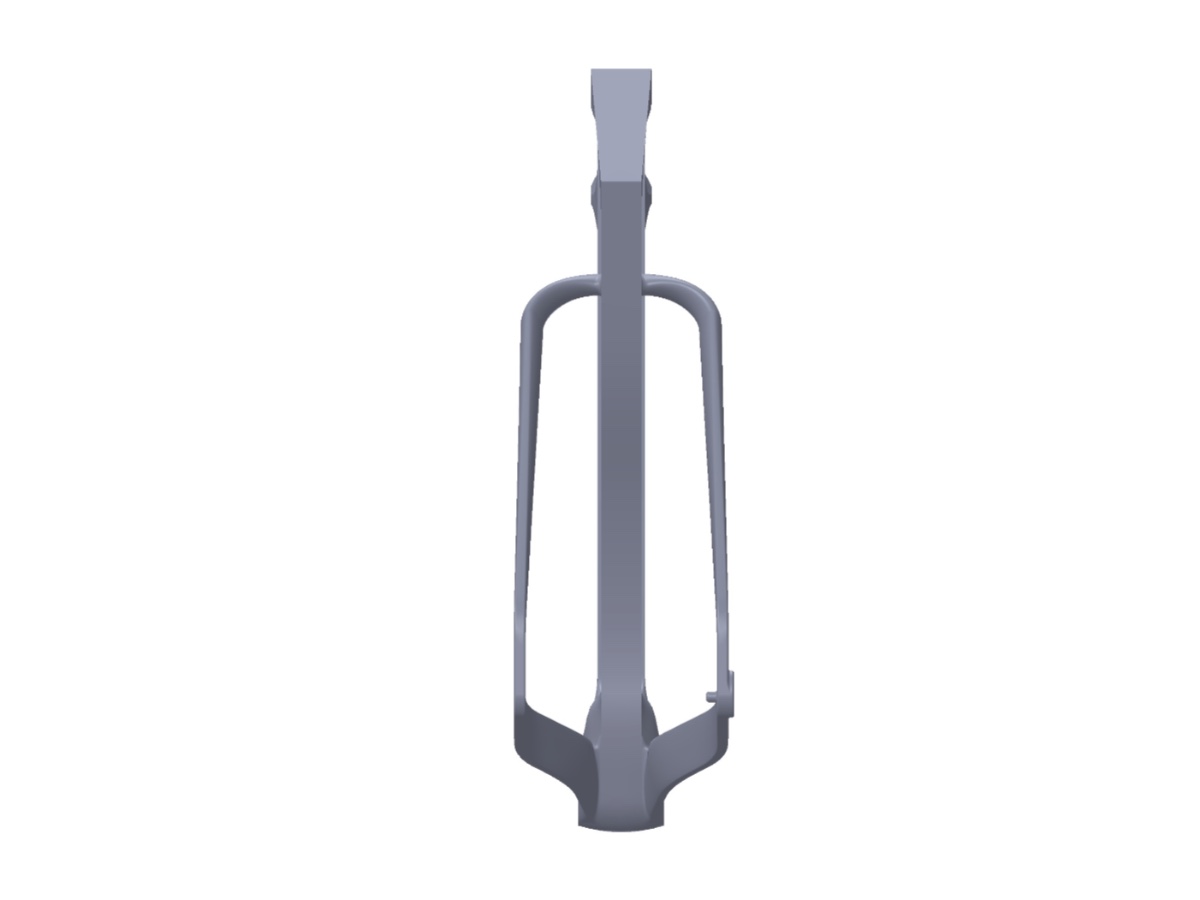
Drag dominates at race speed, so shape matters everywhere on the frame, fork and rider. We test our prototypes in the wind tunnel at IIT Kanpur's National Wind Tunnel Facility, alongside CFD simulation with Ansys.
Stiffness
Rider power has to reach the wheel, not flex the frame, from standing starts to final sprints.
Weight
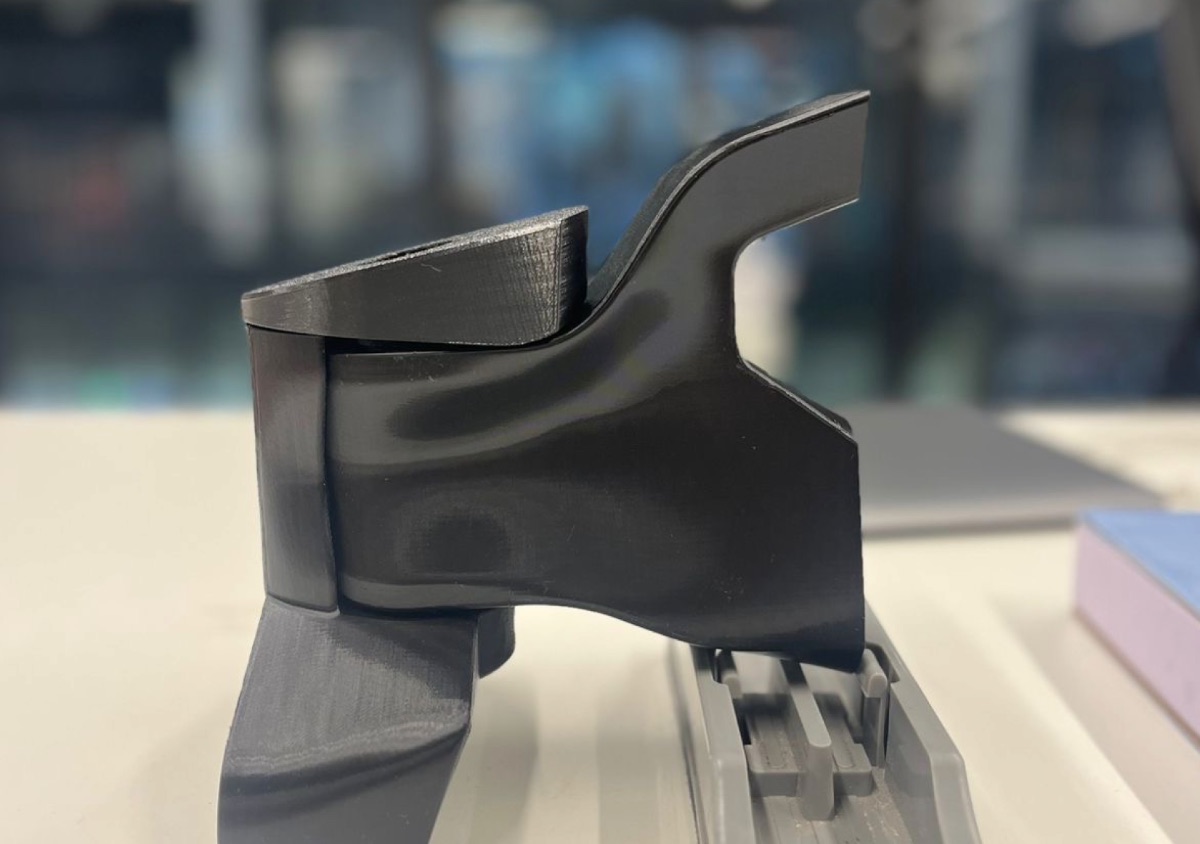
We use laser powder bed fusion (LPBF) to place metal only where the loads need it, so mass comes out without costing strength or stiffness. We benchmark against industry standards and keep improving, to reach the best combination of weight and aerodynamics.
Geometry
Aggressive, race-focused geometry puts the rider in a fast, efficient position, with handling tuned to each discipline, track or road.
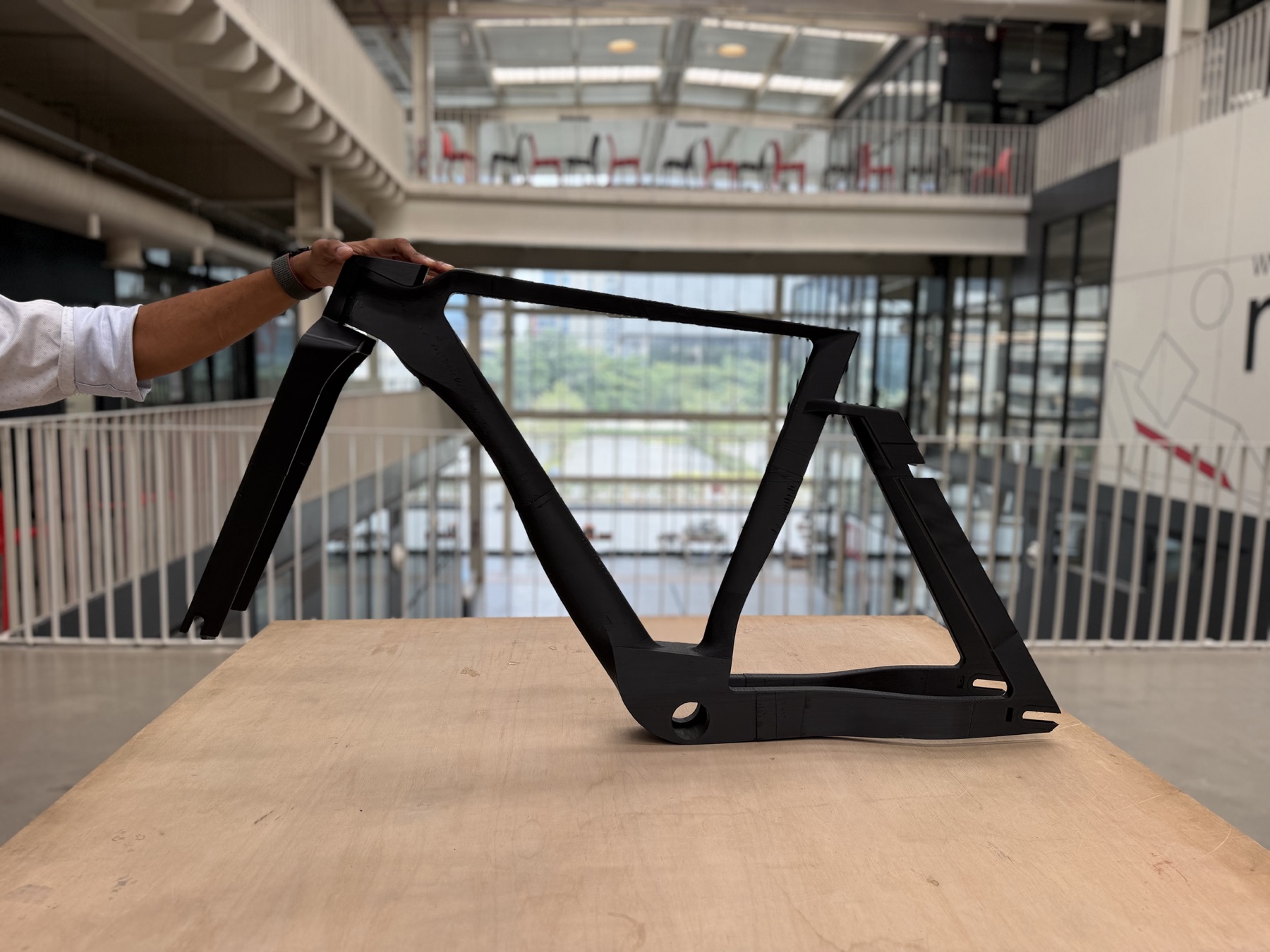
Track frames · Aluminium and titanium
Additive Manufacturing (LPBF)
Status: Partner capability · Manufactured with NCAM- Process
- LPBF
- Materials
- Al · Ti
Laser powder bed fusion, built directly from the 3D model
Aluminium and titanium
Building frame structures layer by layer from fine metal powder, so geometry is driven by engineering requirements rather than the limits of tubes and welds.
Method
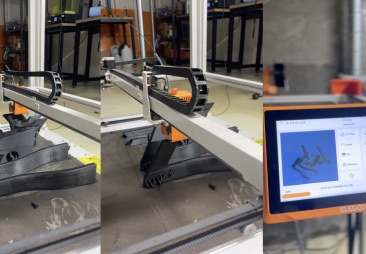
We use laser powder bed fusion (LPBF), a metal additive manufacturing method that builds a part directly from a 3D model. A thin layer of metal powder is spread, a laser fuses the cross-section of the part, and the process repeats layer by layer until the full part is formed.
Because material is placed only where the design calls for it, internal structures, variable wall thicknesses and organic load paths become possible in a single part.
Track
Track racing rewards stiffness, precise geometry and aerodynamic shaping. Additive manufacturing lets us produce the shapes our simulations call for, in aluminium and titanium, without the compromises of joining standard tubes.
Applications
- Frame junctions and lugs
- Dropouts and load-bearing interfaces
- Rider-specific or event-specific components
- Prototype parts for testing
In development
Road frames · T700 to T1100 fibre
Carbon-Fibre Composites
Status: In-house capability · Carbon fibre from Toray and Reliance- Fibre
- T700–T1100
- Construction
- Monocoque
High-modulus carbon fibre
Laid up over EPS foam mandrels, cured in autoclaves
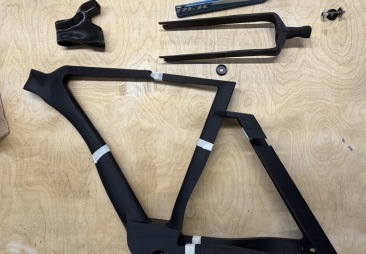
Monocoque frames in T700 to T1100 carbon fibre, laid up over EPS foam mandrels in our own dies and moulds, and cured in high-pressure autoclaves.
Method
Carbon-fibre composites combine high-strength carbon fibres with a resin matrix. Sheets of fibre are laid up in a mould in a defined sequence and orientation, then cured to form a single structure.
The direction of each layer controls how the finished part behaves, so stiffness and strength can be tuned in different directions in different areas of the frame.
Road
Road racing demands a frame that is light, stiff under pedalling, compliant enough for long efforts, and shaped for aerodynamics. Composites let us engineer all four in one structure.
Applications
- Road frames and forks
- Seatposts and cockpit components
- Aerodynamic fairings and profiles
In development
Aerodynamics
Wind tunnel testing.
At racing speeds, aerodynamic drag is the largest force a rider works against. We design for it in simulation, then test it for real.
Simulate
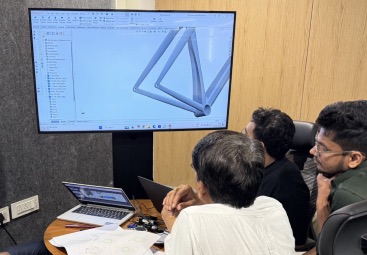
Airflow around frame and fork profiles is modelled with computational fluid dynamics in Ansys, so design options are compared before anything is built.
Test
Prototypes are tested at the National Wind Tunnel Facility at IIT Kanpur, measuring how the design behaves in real airflow.
Refine
Wind tunnel results are checked against the simulations, and what we learn feeds the next design iteration. Results will be published here as they become available.
Process
| Aerodynamics and CFD | Status: In development |
|---|---|
| Wind tunnel testing (IIT Kanpur NWTF) | Status: Partner capability |
| Finite element analysis | Status: In development |
| Topology optimisation | Status: In development |
| Intellectual property | Status: To be published |
Research and build with us.
Researchers, manufacturers, athletes and teams interested in working with us are welcome to get in touch.